Orient Name
A Chinese name you can explain.
The chart is cast first — from the hour and the longitude you were born at, in true solar time. The meaning is chosen against it. Then the sound is tested against 621 homophone traps and 1,144,226 real names before you ever see a candidate.
You get the name, the reading of every character, the chart behind it, and the reason for every point of the score.
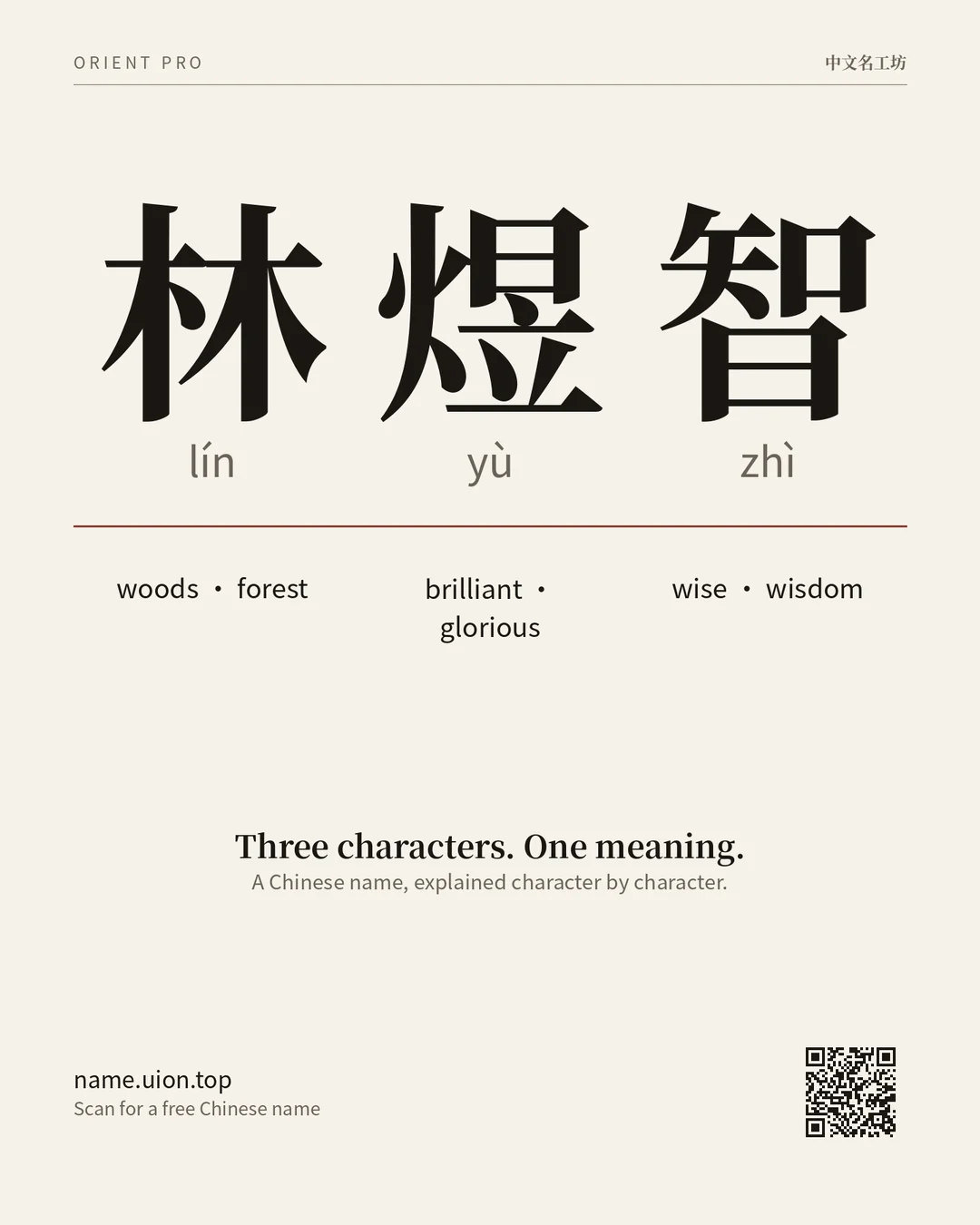
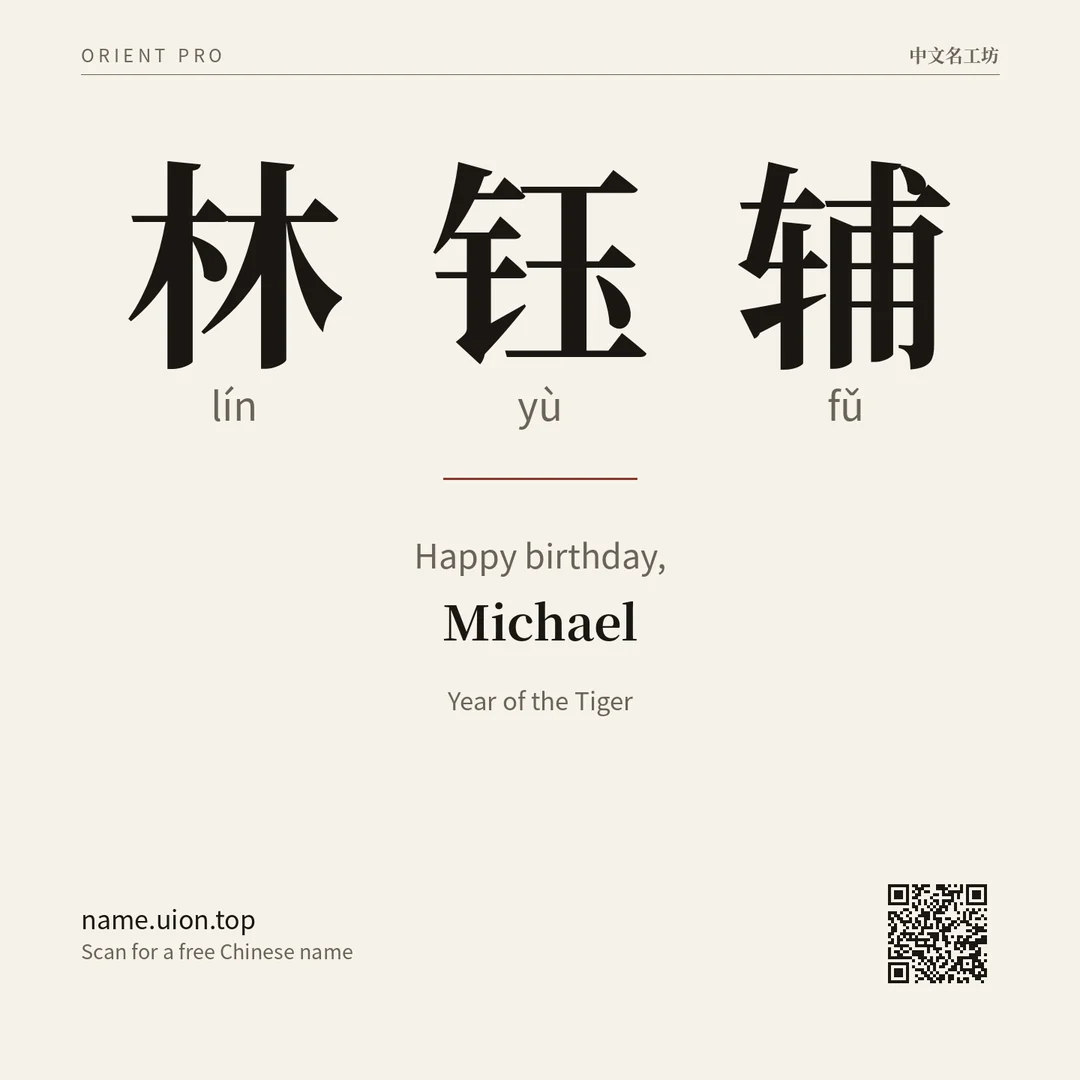
Both cards rendered by the studio's card engine. No mock-ups.
Sample cards
Nine cards, three themes, two layouts.
Every card below was rendered by the same engine that renders yours — the same fonts, the same contrast checks, the same QR code scanned back and compared character by character before the file is saved.
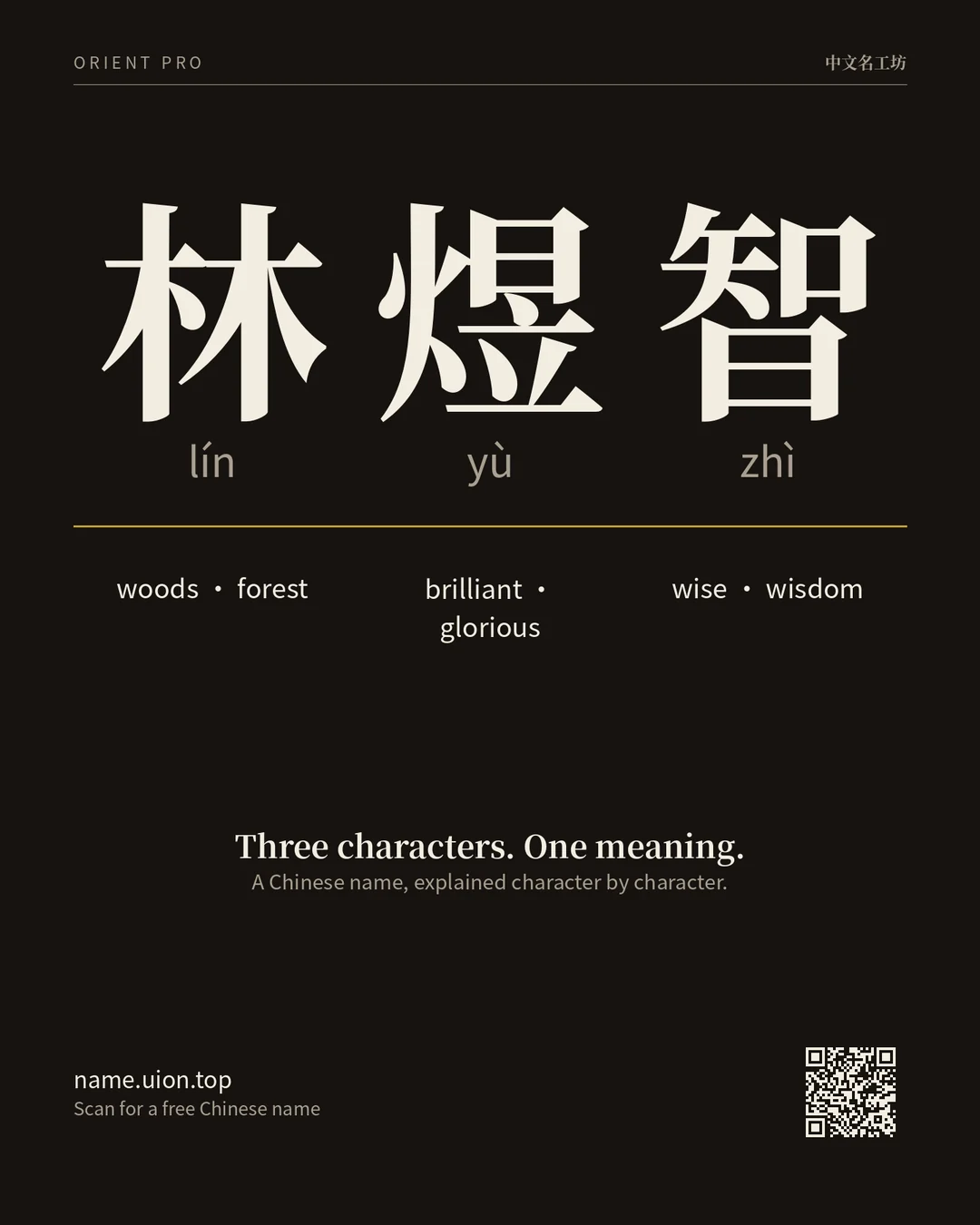
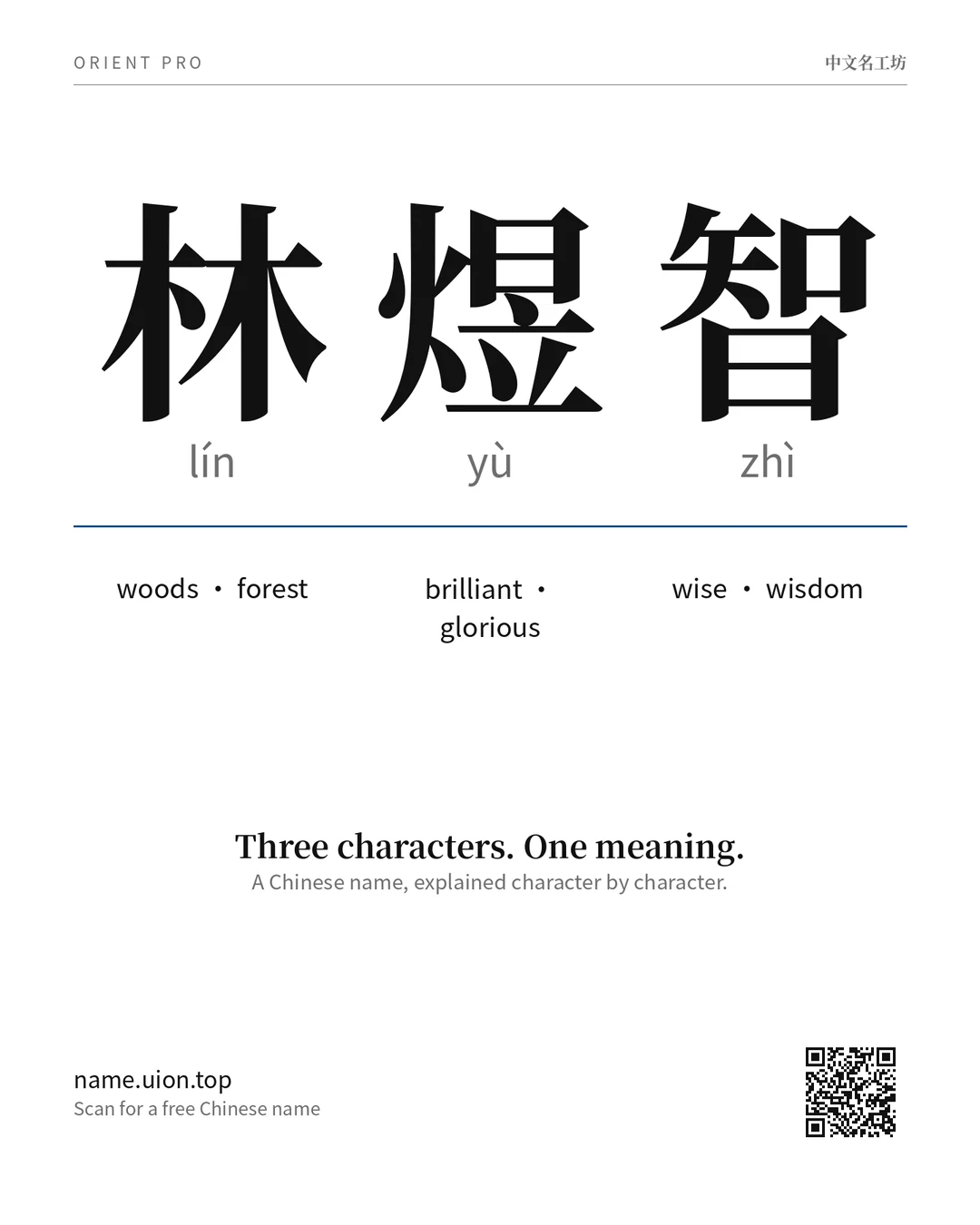
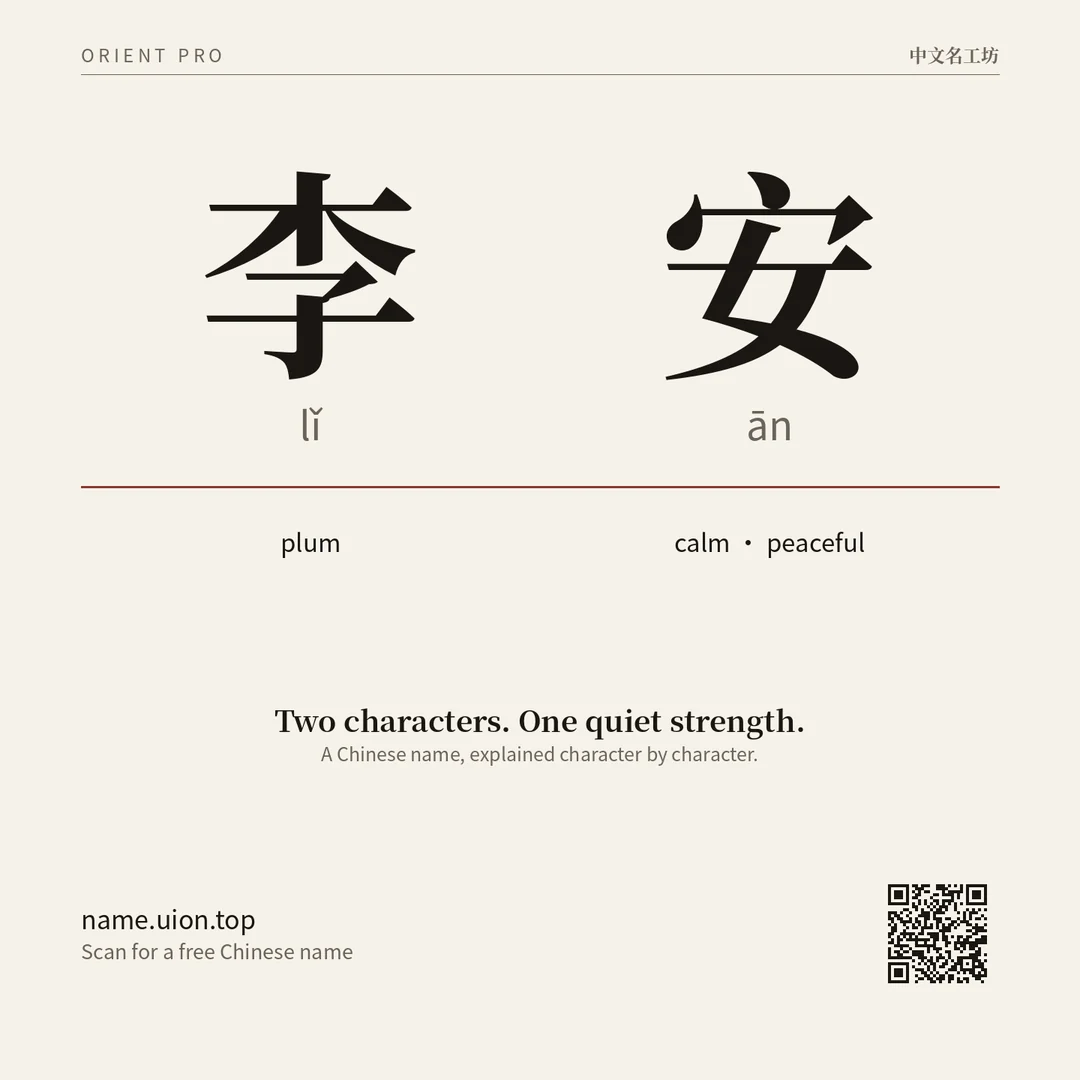
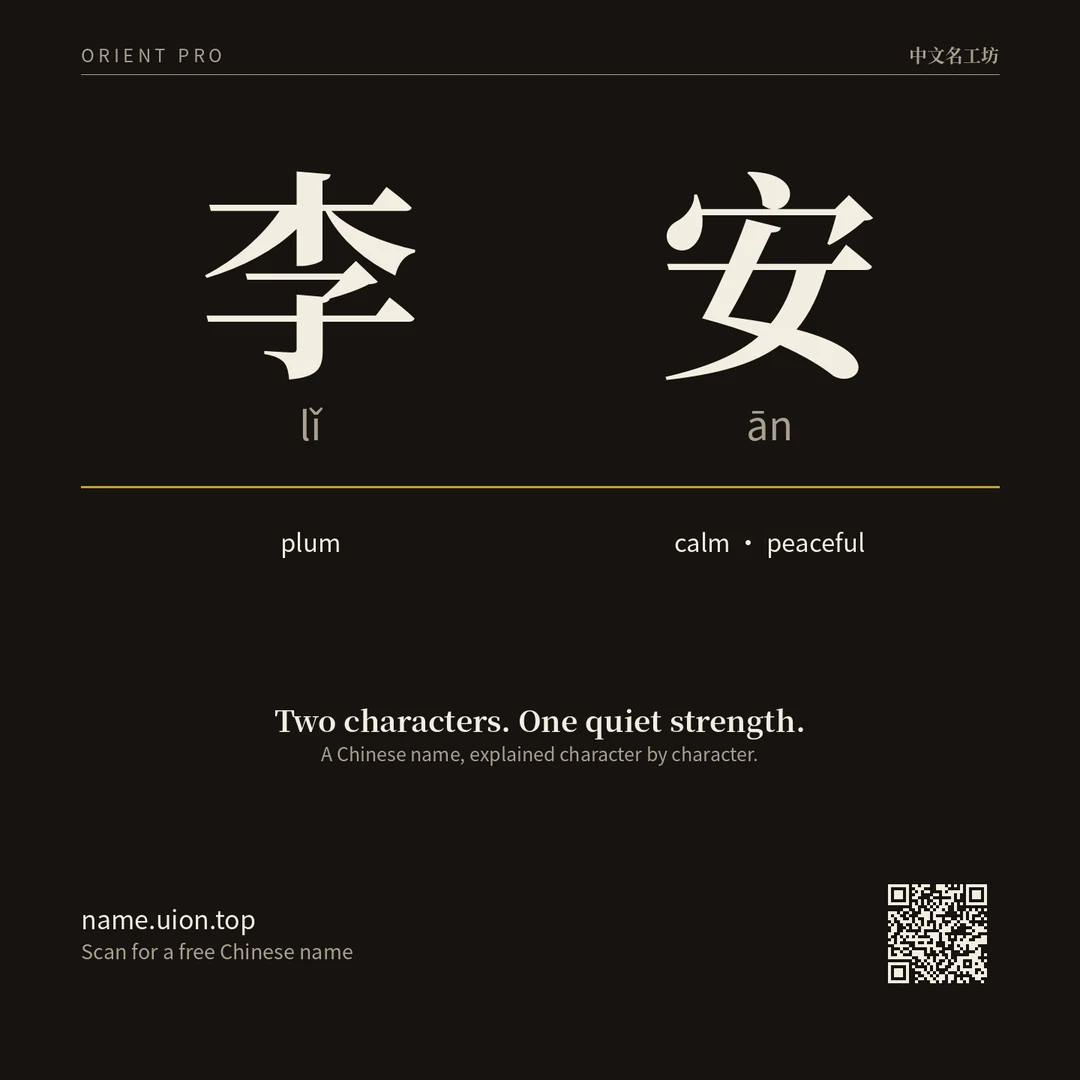
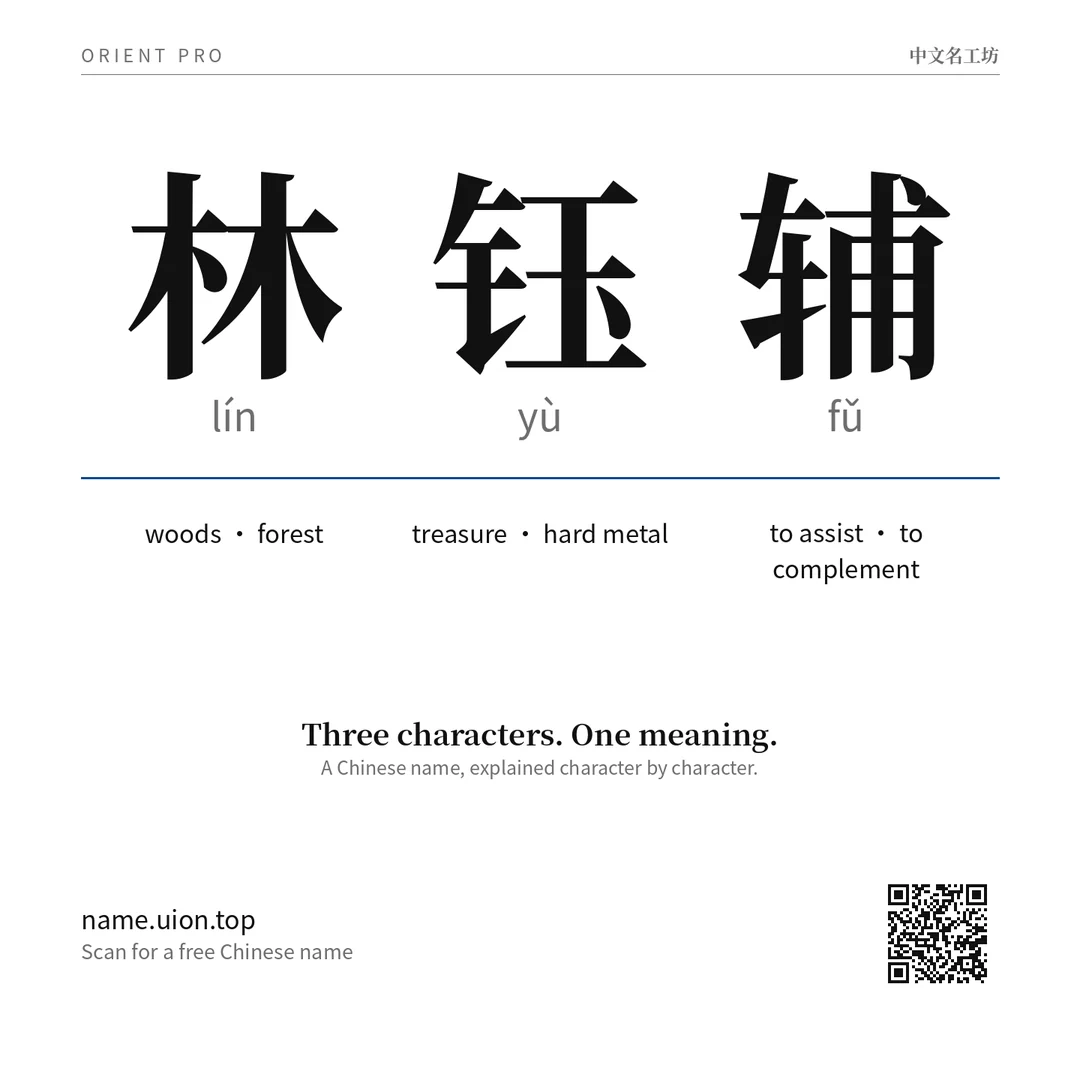
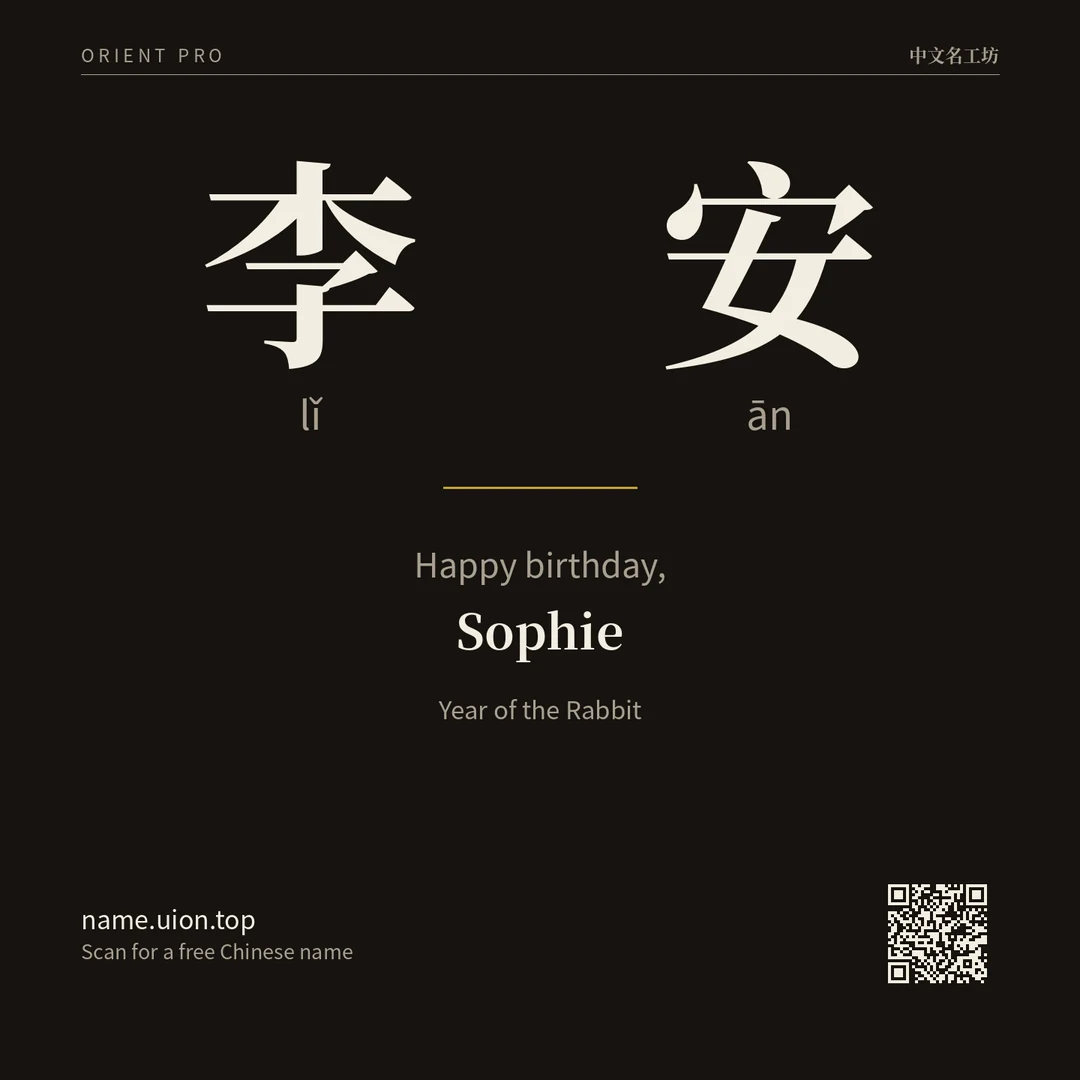
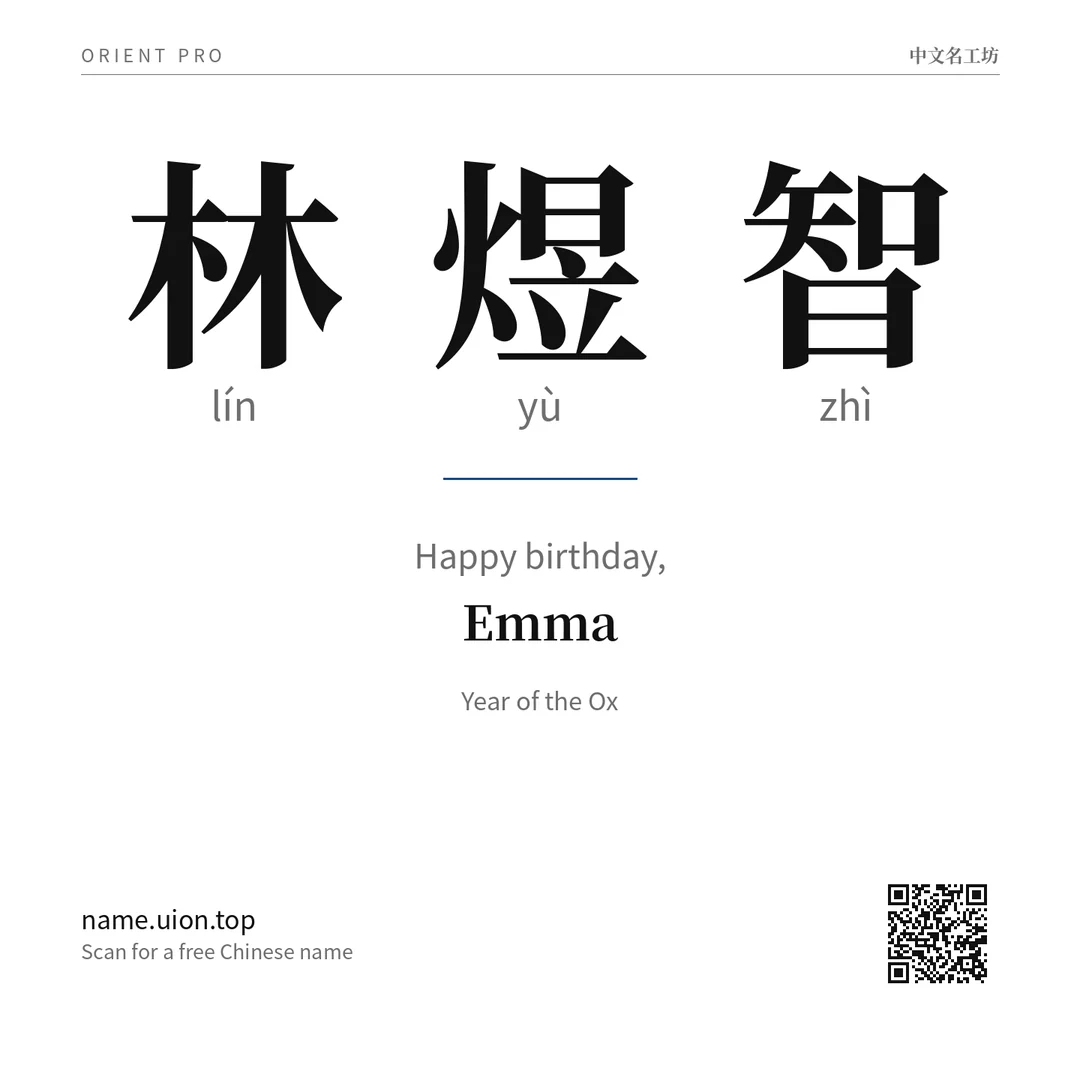
Cards are shown here at 1080 px. The print and share versions are 1440 px, and every one carries a QR code that resolves to the studio.
The card for the name scored beside it — one of the twelve a Pro report returns.
What a result looks like
A real output from the live engine, generated for the surname 林 and copied here without editing. Nothing here was written by a language model — it is computed from the character library and the scoring model.
- 林Lín — a forest; vitality and growth
- 煜Yù — shining brilliance that illuminates the darkness
- 智Zhì — wisdom and discernment
Why it lost 15.4 points. Both given characters share the same tone, so the name goes flat in speech. And the combination is rare: it appears twice in 1,144,226 real names — a real, but thin, precedent. The arithmetic is visible — 28.0 + 21.0 + 12.4 + 15.0 + 8.2 = 84.6 — and the same input returns the same number every time.
Method
Four steps, in this order.
Nothing is invented at the last step to make a number look better.
-
Cast the chart
Date, minute and birthplace. The birthplace supplies the longitude and the time zone that turn a civil clock reading into true solar time; the engine then derives the four pillars, the day master, the strength of the chart and the element it is short of.
-
Build candidates against it
Given names are drawn from 3,692 characters, each carrying pinyin, stroke count, an English gloss and a five-element tag. Characters supporting the favourable element are raised; characters feeding the unfavourable ones are filtered out before scoring.
-
Screen the spoken result
Mandarin has roughly 400 syllables against 10,000+ in English, so collision is common rather than unlucky. Every candidate is checked against 621 homophone patterns — insults, disease terms, vulgarity, body parts — and against 1,144,226 real names to see whether the combination has ever actually been used.
-
Score five dimensions, print every reason
Meaning 30, pronunciation 25, naturalness 20, name-plus-surname combination 15, writing 10. One hundred points, and the reason for each deduction written out in plain language. Chart fit is reported separately — it measures how well a name suits you, not how good the name is.
How the chart is used. The engine reads the day master and the balance of the five elements, then raises candidate characters carrying the element the chart is short of and drops the ones feeding the unfavourable elements — before any name is scored. Every filtered name keeps its reason.
You can run step 1 yourself. The chart page casts the four pillars in true solar time from your own birth data — free, once you are signed in — and hands the result straight on to the studio. Steps 2–4 happen in the naming studio.
The part most tools skip
Each character can be elegant. The combination can still be an insult.
These are entries in the site's pattern library, not invented examples.
Read at conversational speed it becomes 肚子疼 (dùzi téng): stomach ache.
An ordinary-looking name that lands on 饭桶 (fàntǒng): rice bucket, an insult for someone useless.
The library holds 621 of these patterns — 222 severe, 399 weak. A name that trips one is removed before it is ever shown, which is also why a character you were attached to can come back with a refusal attached rather than a score.
What sits behind a name
Every candidate passes through these datasets before it is scored.
Two of these numbers are older than they look, and we would rather say so: the corpus mainly reflects naming habits of the 1980s–2000s, so a name that was rare then is not therefore a bad name. And when the character library has no gloss for a character, the page says so instead of inventing one.
What you get
Six free. Twelve with the chart.
Six names, scored and explained
- Six candidates from your surname in under a minute
- Pinyin with tone marks and a dictionary gloss per character
- A quick estimate — the chart-fit index and the reason behind every deduction come with Pro
- Pick one and it becomes yours: a card with your name on it, and a page that stays
Twelve names built against your chart
- Twelve names scored against your four pillars, day master and favourable element
- A separate chart-fit index, shown on its own — never folded into the total
- A web report and a six-page PDF
- A printable name poster and a shareable page
Journal
Notes on the parts of Chinese naming that are easy to get wrong.
Every number in them comes from the running system, and where a limit is honest, it is stated.
-
Why “it sounds like your name” is a weak rule
Transliteration keeps the sound and discards the meaning. What that costs, and what a meaning-first approach does instead.
-
Ten in the morning is not the same hour everywhere
Longitude and the equation of time can move true solar time by nearly two hours — enough to change the hour pillar.
-
How to read a Chinese name
Surname first, one syllable per character, tone marks that change the meaning — and the four mistakes to avoid.
-
What a BaZi chart claims — and what it does not
Four pillars, a day master, a strength reading and a favourable element. Where the honest limits are.
Limits
Rarity is not quality, and a chart is not a fate.
Contact
Scan, or write.
Questions, bugs, partnerships, or a name you cannot stop thinking about. The two codes go straight to a person — there is no team behind them.
Also on Instagram.